
You can read everywhere about the health benefits of protein (and there are many). But you're naturally cautious, and before embarking on a protein diet, you want to know if you risk gaining weight. So, do proteins make you gain weight? To answer this question, let's first look at calories and your daily calorie needs.
The myth of foods that make you gain weight
"Don't eat that chocolate croissant, you'll gain weight." This is both true... and false! Too many people believe that indulgent foods have a direct effect on weight gain. But in reality, it's not THEY that are responsible for weight gain, but rather the imbalance between calorie intake and needs.
A person gains weight when they consume more calories daily than their body burns. If you need 2500 calories a day and you consume 2700, you will gain weight—it's as simple as that. However, whether it's 2700 kcal of green vegetables or chocolate croissants, it's the same thing! Indeed, if you eat a dish containing 150 kcal of steamed zucchini or a treat that also contains 150 kcal, the effect on your weight gain will be exactly the same. What matters is not exceeding your daily energy requirements.
Daily energy requirements
Daily energy requirements refer to the amount of energy (calories) your body needs to function properly while maintaining its current weight. It is also called "basal metabolic rate".
In other words, if your daily calorie intake is higher than your needs, you gain weight. If it's lower, you lose weight. Of course, this doesn't happen overnight, so yesterday's pizza won't necessarily show up on the scale the next morning. And it all depends on how much you indulge. With a surplus of 100-200 calories per day, weight gain will only be noticeable after several weeks, while with a calorie surplus of 500 kcal per day, you could gain about half a kilo per week. The average daily energy requirement for a typical level of physical activity (PAL of 1.63) has been estimated at 2,600 kcal per day for men aged 18 to 69, and 2,100 kcal per day for women aged 18 to 59. However, it's important to remember that daily energy requirements are unique to each individual and depend on several factors.
- Age: In general, energy requirements decrease with age due to loss of muscle mass and a slowing of metabolism.
- Sex: Men often have higher calorie needs than women, partly due to greater muscle mass and a larger average height.
- Weight and height: the higher a person's weight and height, the more energy their body needs to maintain its vital functions and daily activities.
- Physical Activity Level (PAL): More active people burn more calories, even at rest, due to a faster metabolism and greater muscle mass. Energy requirements are therefore higher to maintain energy balance.
- Basal metabolism: People with a faster metabolism burn more calories at rest, which can slow down weight gain.
To estimate energy needs, healthcare professionals often use equations such as the Harris-Benedict or Mifflin-St Jeor equations, which take into account the factors mentioned above. To simplify the process, you can also use an online calorie calculator to estimate your daily energy requirements.
Where do calories come from? Understanding macronutrients
Macronutrients are the body's main source of energy (in the form of calories). They provide the fuel necessary for our daily activities and the proper functioning of our body. They are divided into three main categories:
- Carbohydrates
They are the body's main source of energy. Carbohydrates are found primarily in foods such as bread, pasta, rice, fruits, vegetables, and sugar. They are classified into two categories: simple carbohydrates (or simple sugars), which are quickly absorbed by the body, and complex carbohydrates (or complex sugars), which provide energy over a longer period.
2. Proteins
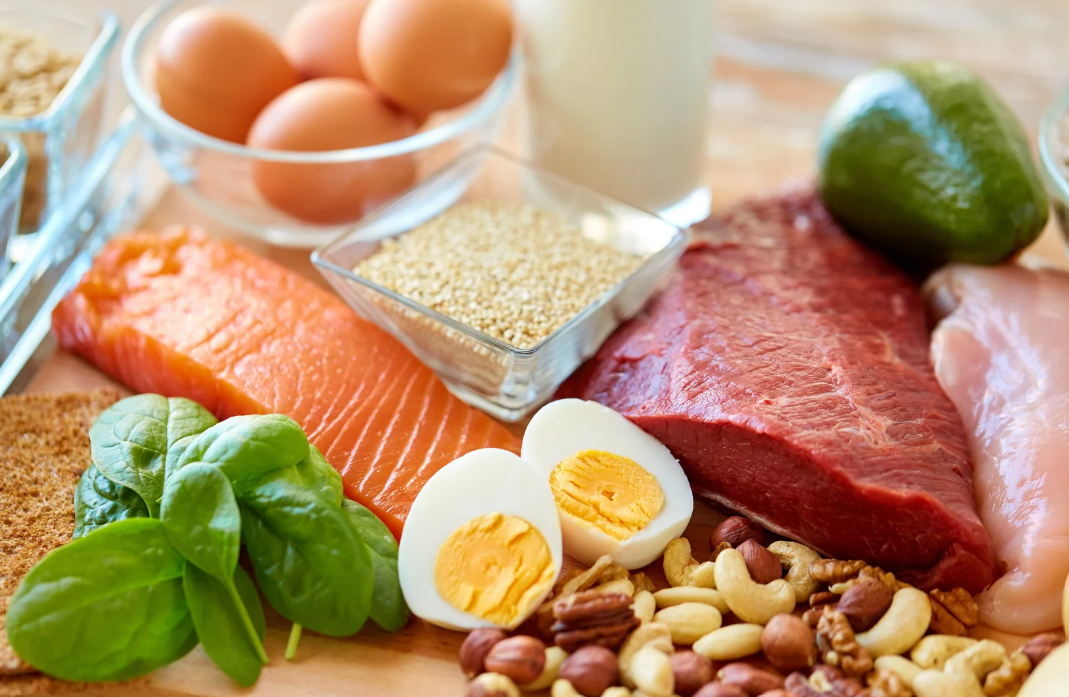
Proteins are essential for building and repairing body tissues, including muscles and organs, and for the production of enzymes and hormones. They are found in foods such as meat, fish, eggs, dairy products, legumes, and some plant-based foods.
They provide a concentrated source of energy and are necessary for the absorption of certain vitamins (fat-soluble vitamins such as vitamins A, D, E, and K). Lipids are found in oils, butter, cream, nuts, seeds, and animal products. There are different types of fats, including saturated fatty acids, unsaturated fatty acids (monounsaturated and polyunsaturated), and trans fatty acids.
The amount of energy provided by each type of macronutrient is not the same. Here is the caloric load for each of them:
- Carbohydrates: 4 kcal per gram
- Protein: 4 kcal per gram
- Fat: 9 kcal per gram
We could also add alcohol, of which ethanol contains 7 kcal per gram. However, it is considered "empty calories" because it provides no nutrients to the body. As for micronutrients, such as vitamins, minerals, antioxidants, and polyphenols, they are also essential to our health, but they are not a source of energy (calories).
Do proteins make you gain weight?
Now that you understand the concepts of daily energy requirements and macronutrients, you could almost answer the question "Do proteins make you gain weight?" without our help. But since we're super nice, we'll give you a little help. Let's be clear: proteins make you gain weight if—and only if—their total calorie intake causes you to exceed your daily energy needs. This is because excess calories, regardless of their source, can be stored as fat.
Excessive protein consumption is generally safe for healthy individuals and is not associated with significant health problems in those without particular predispositions.
Proteins, therefore, have no direct effect on weight gain. On the contrary, numerous studies have shown that diets rich in protein can actually play a positive role in weight management, particularly due to their effect on satiety.
Furthermore, the body expends more energy digesting protein, which can also contribute to a slightly higher calorie expenditure. However, it is crucial to maintain a balanced diet and not neglect other essential food groups for a healthy and balanced eating plan.
A protein bar that's delicious and low in sugar.
It's not always easy to meet your daily protein needs without risking unhealthy eating and weight gain. Fortunately, we have the solution for you.
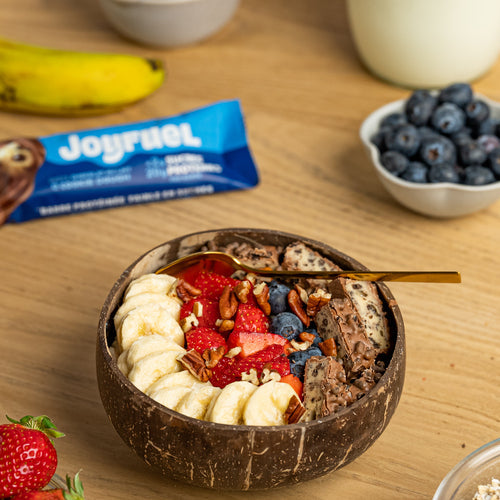
Joyfuel presents the first gourmet, nourishing AND low-sugar protein bars , with ideal nutritional values for anyone looking to reduce sugar in their diet or for athletes who want to support their effort and recover better.
Each Joyfuel bar contains 20 grams of protein , the equivalent of 3 eggs. An ideal ally to support your athletic activities, meet your nutritional goals, or simply have a snack on hand.
With less than 2g of sugar per bar (17g less than the average chocolate bar on the market), Joyfuel bars are a true alternative to traditional, overly sweet chocolate bars. Such a delicious and low-sugar snack—what more could you ask for?
Rest assured, we haven't sacrificed taste: our multi-textured chocolate recipes are ultra-indulgent, perfect for a protein-packed treat after sports or when you're feeling peckish.