
The day after a tough workout, every step feels like an ordeal. Thighs burn, calves ache… These dreaded muscle soreness, known as DOMS (Delayed Onset Muscle Soreness), are a stark reminder that exertion takes its toll. Sound familiar? The good news is, it's not inevitable: with proper sports nutrition and hydration, you can transform your recovery into a powerful accelerator of progress.
Muscle soreness and sport: a signal from the body, but not inevitable
Aches, muscle stiffness, discomfort… after an intense workout or getting back into it, muscle soreness often sets in. It's the body's way of telling you to get stronger: it reflects the micro-tears in your muscles that are necessary for progress.
Like a guitar string that vibrates too loudly and needs to be retuned, a muscle needs to be repaired and rebalanced. The key? Nutrition and hydration, which become your best allies in limiting pain and promoting faster recovery.
Understanding the origin of muscle soreness to better prevent it
Muscle soreness typically appears 12 to 48 hours after exercise. It is caused by:
- Micro-tears in the muscles, a consequence of unusual or intense work
- An inflammatory reaction that sets in to repair the fibers
- An accumulation of metabolic waste (free radicals, excess lactic acid, etc.)
An effective three-pronged approach to limit them: targeted nutritional intake, regular hydration and active recovery.
Nutrition: An essential ally against muscle soreness
Protein and muscle recovery: your allies against muscle soreness
Imagine your muscles as a cracked wall: to reinforce it, you need solid bricks. These bricks are proteins. They rebuild damaged muscle fibers and accelerate internal healing.
These should be prioritized in your post-workout meals:
- Lean meats, fish, eggs,
- Legumes and dairy products,
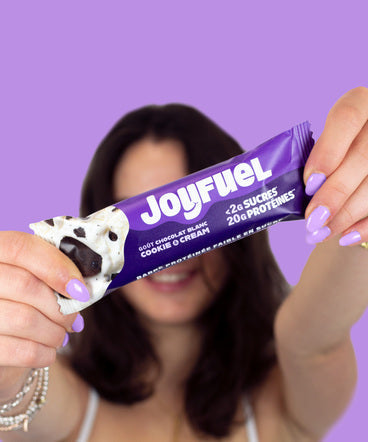
- Protein-enriched sports snacks, such as Joyfuel bars.
Carbohydrates and sport: the key to restarting your muscles and limiting soreness
After intense exercise, your muscles have depleted their glycogen stores. To replenish them, carbohydrates are essential. They provide your muscles with the energy they need and reduce the feeling of stiffness.
Whole grain starches (rice, quinoa, semi-whole grain pasta) or fruits rich in fast sugars (banana, red fruits) become your allies to regain strength and restore muscle fluidity.
Antioxidants: a shield against inflammation
During exercise, your muscles produce free radicals that contribute to some of the pain. Antioxidants act as shields. Vitamins C and E, polyphenols, and carotenoids help neutralize these free radicals produced during exercise. They are found in:
- Berries (blueberries, blackcurrants, raspberries),
- Citrus fruits,
- Colorful vegetables (bell pepper, carrot, spinach).
Omega-3s: naturally soothing muscles
These essential fatty acids are like a soothing oil that calms your joints and muscle fibers. They are found in oily fish (salmon, sardines, mackerel), chia seeds, and flax seeds. Regular consumption helps reduce inflammation and stiffness after exercise.
Sports hydration and electrolytes: the forgotten strategy for reducing muscle soreness
We often talk about protein and carbohydrates, but we forget that water is the athlete's primary "magic drink." A well-hydrated muscle is flexible, responsive, and recovers better. Conversely, a dehydrated muscle becomes stiff and painful.
- Before exercise: hydrate regularly throughout the day, without waiting until you are thirsty.
- During exercise: favor mineral-rich water or isotonic drinks during long and intense sessions.
- After exercise: replenish lost water but also electrolytes (sodium, potassium, magnesium).
Yes, we often talk about water, but less so about sports electrolytes, which are nevertheless essential. Sodium, potassium, magnesium… they play a key role in restoring fluid balance and reducing muscle soreness. A recovery drink rich in electrolytes or a suitable mineral water (Saint-Yorre, Vichy) provides these minerals after an intense workout.
Nutrition + hydration: the winning combination for sustained performance
Nutrition and hydration are like two dance partners. While sports nutrition and hydration are effective separately for muscle recovery, it's their synergy that makes the difference. Good recovery means:
- Proteins for repair,
- Carbohydrates for refueling
- Antioxidants to soothe,
- Electrolytes to rebalance.
Our practical tips for reducing muscle soreness naturally
Because a good workout shouldn't mean prolonged discomfort, here are some simple and effective steps to help your muscles recover better:
- Rehydrate immediately after exercise: a glass of mineral-rich water or a recovery drink.
- Eat within 30 to 60 minutes post-exercise: a balanced meal or snack (protein + carbohydrates + antioxidants).
- Promote anti-inflammatory foods: oily fish, red fruits, turmeric, ginger.
- Avoid alcohol and excessive caffeine: they exacerbate dehydration.
- Getting a good night's sleep: sleep remains the best ally for muscle recovery.
FAQ – Reducing muscle soreness through diet and hydration
Are protein powders essential?
Not necessarily. Imagine your muscles as a brick wall weakened by exertion: protein represents the building blocks that repair it. Most of the time, your diet is sufficient to provide these essential building blocks: eggs, fish, legumes, and dairy products already fulfill this role very well. Protein powders, on the other hand, are more of a quick fix: convenient and fast, but far from essential if your meals are balanced.
Should you drink significantly more water after exercising?
Not necessarily more, but better: the key is to compensate for the water and mineral losses linked to perspiration.
Are anti-inflammatory foods enough to prevent muscle aches?
The important thing isn't to drink more, but to drink better. After exercise, you lose not only water, but also valuable minerals through perspiration. Think of your muscles as an engine: it's not enough to just refuel (with water), you also need to replenish essential fluids (electrolytes). Mineral-rich water or a recovery drink will therefore be much more effective than a simple large bottle of plain water.
Do magnesium and omega-3 really help with muscle aches?
Yes, to some extent. Magnesium contributes to proper muscle function and reduces cramps, while omega-3 fatty acids have natural anti-inflammatory properties. They are found in nuts and seeds, oily fish, certain vegetable oils, and legumes. Regularly including them in your diet promotes faster muscle recovery and reduces post-exercise stiffness.