Gaining muscle mass through light bodybuilding: how to adapt your diet without making mistakes?
Light muscle building, tangible results. The secret? Adapt your diet to support gentle muscle gain. Follow our advice for a personalized program.
Gaining muscle without overdoing it: a more common goal than you might think
When we talk about gaining muscle mass, we often imagine an intense weight training program, kilos of rice and chicken, and supplements with every meal. However, many people aim for a moderate, gentler approach to muscle gain, suitable for light weight training or gym sessions two to three times a week.
This goal is relevant for both men and women, beginners and experienced athletes alike, who are looking to tone up or improve their performance. In this context, nutrition plays a key role in muscle gain. Without going to extremes or relying on miracle products, a few good habits are all it takes to effectively support this approach.
Controlled surplus and nutritional balance: the foundations of successful muscle gain
To develop muscle mass, the body needs energy, and therefore a slight calorie surplus. But be careful: there's no need to increase your intake by 500 to 1000 kcal per day, as this risks promoting fat storage. A surplus of 200 to 300 kcal is generally sufficient.
This surplus must be balanced between the three macronutrients:
- Carbohydrates are the primary fuel for muscles, especially around workouts. They are found in fruits, vegetables, whole grains, and legumes.
- Protein supports muscle building. Requirements can range from 1.2 to 1.6 g/kg of body weight depending on physical activity. Generally, ANSES (the French Agency for Food, Environmental and Occupational Health & Safety) estimates that healthy adults need at least 0.83 g/kg/day, and acknowledges that intakes of up to 2.2 g/kg/day can be considered compatible with a balanced diet.
- Lipids are often wrongly neglected: they contribute to hormonal regulation and general health.
In short, no restrictive diet or extreme high-protein diet: a balanced, natural diet for mass gain adapted to one's own pace is sufficient.
What should I eat before and after training?
Before training: energy available but easy digestion
The goal is to provide energy without weighing down the stomach. A protein-rich meal or a snack 1 to 1.5 hours before exercise is recommended. Ideally, this would consist of a moderate glycemic index carbohydrate combined with a small portion of protein.
Examples of meals for muscle gain:
- Wholemeal bread + almond butter + applesauce
- Banana smoothie + oatmeal + plant-based milk
- Cereal bar + plain yogurt
After training: muscle recovery and repair
In the 30 to 60 minutes following exercise, the body is particularly receptive. This is the ideal time to consume:
- A source of protein (animal or plant-based)
- Carbohydrates to replenish reserves
- A little fat, preferably unprocessed.
Examples:
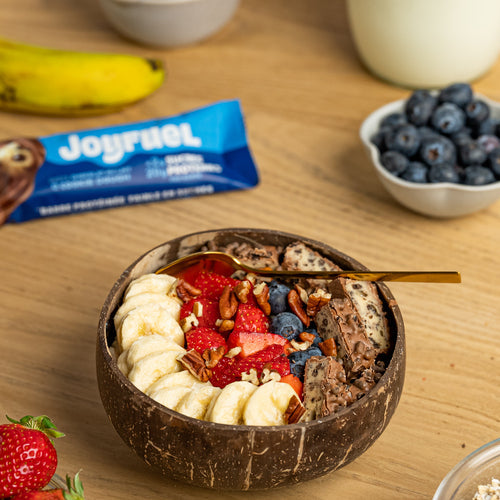
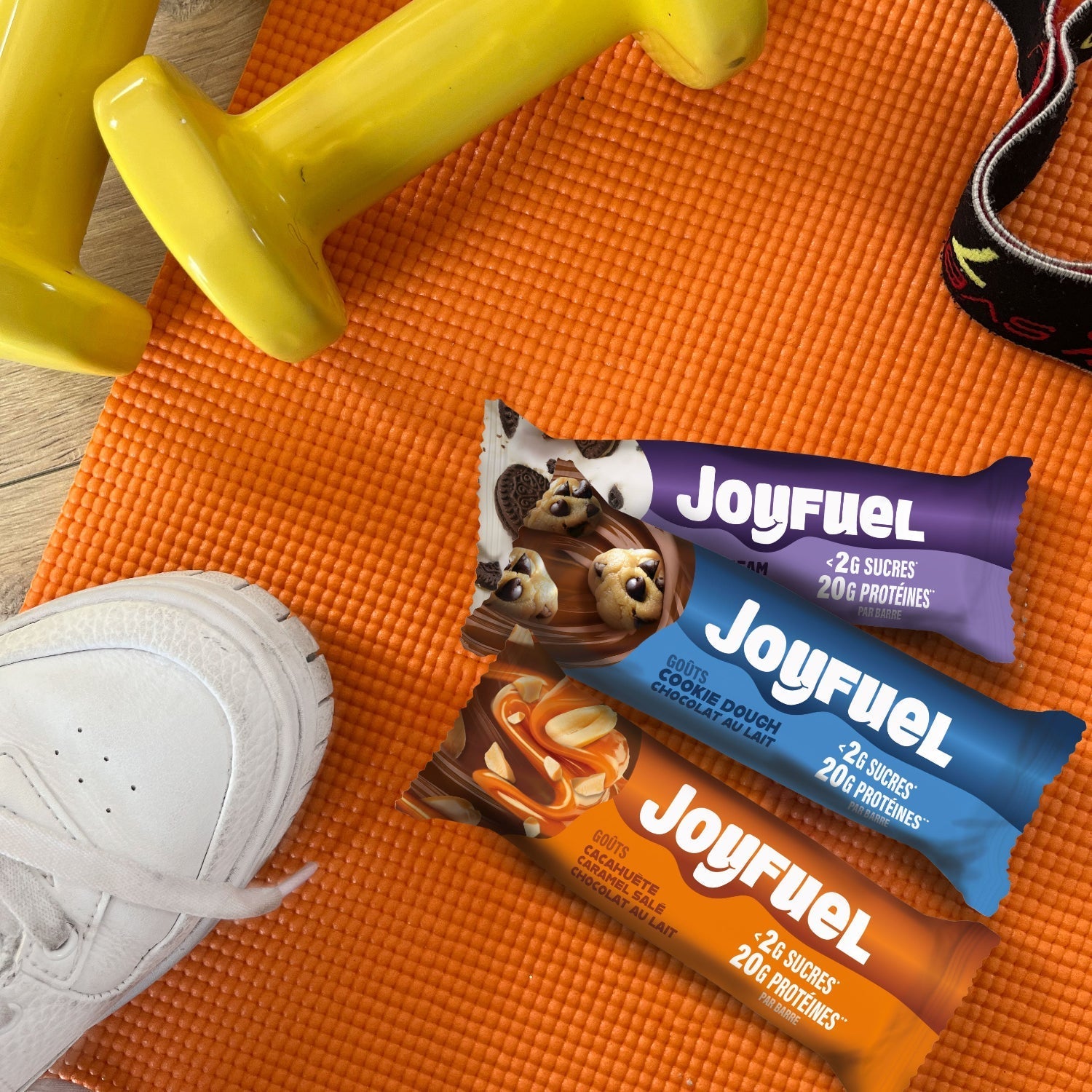
- Joyfuel Protein Bar
- Greek yogurt + muesli + red berries
- Wholemeal toast + hummus + hard-boiled egg
These post-workout supplements promote optimal recovery and support muscle mass development.
Focus on protein-rich snacks and light meals
Post-workout or between-meal snacks are valuable for supplementing daily nutrients and promoting muscle growth, even with a moderate-weight training program. In light weight training, they are also a good way to increase intake without adding bulk to main meals.
A protein bar for muscle gain can be a quick and convenient snack, requiring no cooking. Alternatives include:
- Homemade protein smoothies
- Oilseed and dried fruit mix
- Savory snacks made from roasted chickpeas
The important thing is to ensure the quality of the ingredients and the balance between proteins, carbohydrates and lipids.
Should you adjust your meals when doing light bodybuilding?
Absolutely. Even with moderate training, nutritional needs change. Natural muscle gain relies on well-structured, light bodybuilding meals rich in complex carbohydrates, quality protein, and healthy fats. All this within an approach that avoids excess and frustration.
Energy bars and protein bars: practical allies for the everyday athlete
When you're short on time or working out between appointments, nutrition bars can be a real lifesaver. But you still need to choose the right ones.
What is the difference between an energy bar and a protein bar?
- A sports energy bar is designed to quickly provide carbohydrates during or before exercise (e.g., trail running energy bar, cycling energy bar).
- A protein bar designed for bodybuilding is primarily aimed at muscle recovery or supplementing protein intake.
At Joyfuel, the bars have been designed to support athletes on a daily basis, with a practical format adapted to different times of the day.
Example of a typical day for a "light mass gain" program
Here is an example of a day suitable for moderate indoor activity:
- Breakfast: Wholemeal bread + scrambled eggs + berries + nuts
- Lunch: Quinoa + roasted vegetables + chicken fillet + rapeseed oil
- Before training: Sports cereal bar + sugar-free applesauce
- Post-workout: Joyfuel protein bar or Greek yogurt + oatmeal
- Dinner: Basmati rice + red lentils + steamed vegetables + pumpkin seeds
What are some common mistakes to avoid?
Skipping meals: even for slight muscle gain, regularity is key.
- Too much protein, not enough carbohydrates: carbohydrates are the main fuel for muscles, don't neglect them.
- Underestimating the role of sleep: muscle recovery also depends on quality nights.
- Trust in non-sourced products: favor bars and supplements whose composition is clear and transparent.
Listening, regularity, balance: the key words for an effective diet for light bodybuilding
Gaining muscle mass with light bodybuilding doesn't require drastic changes or excessive supplements. What matters is:
- A slight calorie surplus
- A good distribution of macronutrients
- Meals adapted to the demands of physical activity
- And well-chosen sports snacks, like Joyfuel nutrition bars
All this within a sustainable progression approach, for lean, natural muscle gain without unnecessary pressure.
FAQ – Muscle Gain & Light Bodybuilding
What diet will help you gain muscle without gaining fat?
A balanced diet, with a surplus of 200 to 300 kcal per day, rich in complex carbohydrates, quality proteins and good fats.
Is it possible to gain muscle mass with only 2 to 3 sessions per week?
Yes, provided you adjust your intake. In light bodybuilding, the key to gaining mass is regularity and quality meals.
Should you take supplements for moderate muscle gain?
Not necessarily. A good diet can be enough. Supplements are useful as a complement if meals are incomplete or when time is short.
What is the best snack after light weight training?
A source of protein + carbohydrates: Greek yogurt + oatmeal, Joyfuel protein bar, banana-plant protein smoothie, etc.